
At the beach at Bloubergstrand, Cape Town, New Year’s Day 2026.
What makes a fleeting image worth lingering over?
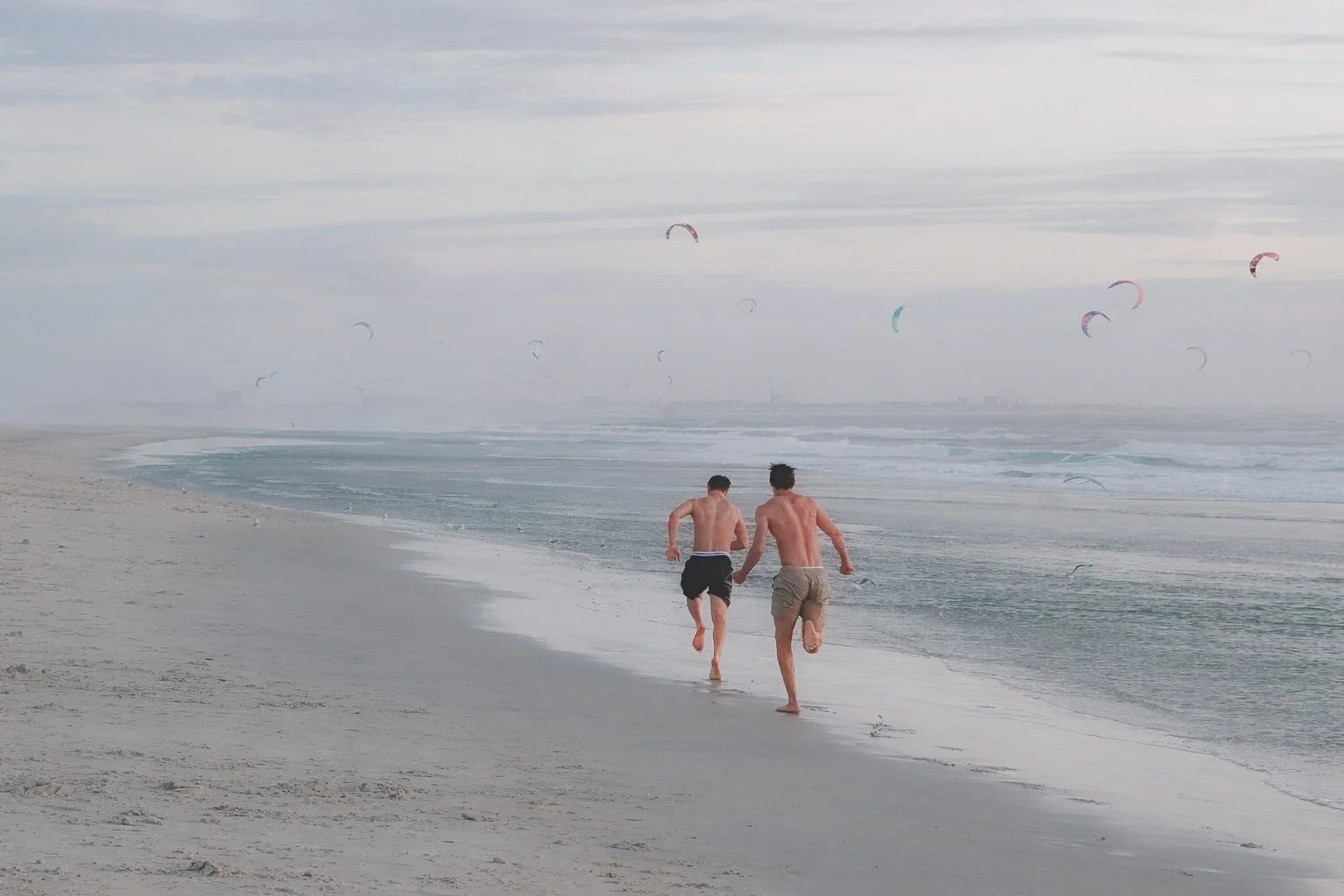
The first image asks the question quietly. Two boys run along the shoreline in Cape Town, caught mid-movement as the day loosens its hold. The light is thinning. The moment already slipping forward. Nothing in the image insists on being remembered — and yet it stays with us. There is no clear beginning or conclusion. Just motion, soft colour, and the rhythm of time easing into evening. The openness of the scene matters as much as the figures themselves: wet sand stretching ahead, the horizon dissolving, kite surfers fading from view as the boys move on together. It feels less like a moment preserved, and more like one gently passing through.
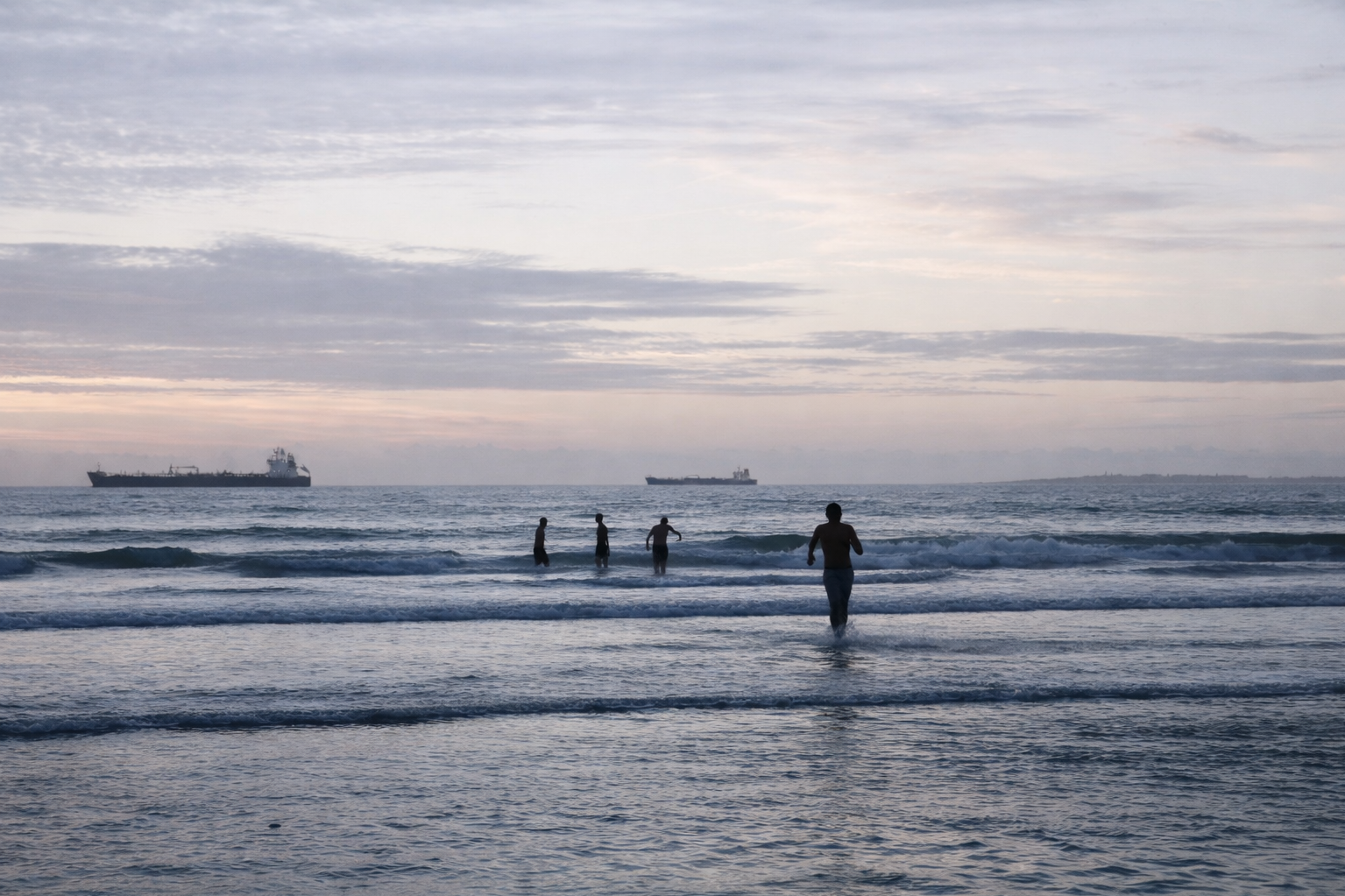
The second image widens the pause. Figures stand scattered in the shallows as the sea darkens and the sky settles. The water repeats itself quietly against the shore, and scale shifts — people becoming small, temporary, almost incidental. It’s a moment suspended between reflection and anticipation, where nothing needs to happen yet.
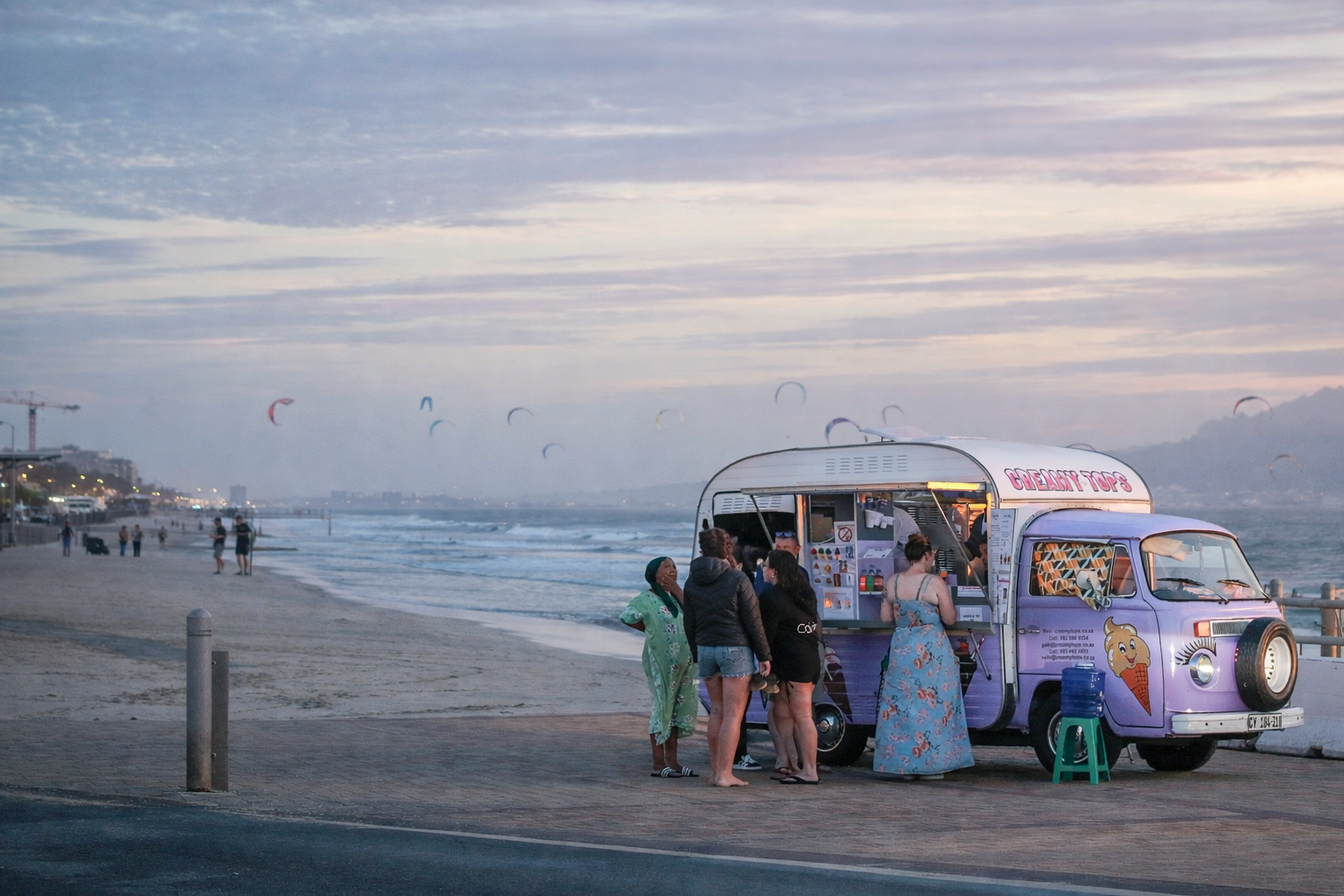
The final photograph brings us closer again. A pastel-coloured ice-cream van glows softly at the edge of the beach, people gathering without urgency. There is no spectacle or announcement — just familiar rituals continuing as the light fades and evening takes over. The scene feels unposed. Lived-in. Calm in the way only the end of a long day can be.
Together, these images form a conversation about presence rather than permanence. They resist drama and declaration, favouring instead the quiet transitions — the in-between spaces where meaning often settles unnoticed.
I’m drawn to images like these. Moments not designed to endure unless caught — and that remain not by demanding attention, but by inviting us to linger.